Table of Contents
- Key Takeaways
- Quick Verdict
- Product Overview & Specifications
- Real-World Performance & Feature Analysis
- Content Authority & Clinical Utility
- Usability & Digital Experience
- Application in Professional Settings
- Pros & Cons
- Pros
- Cons
- Comparison & Alternatives
- Vs. “The Anxiety and Phobia Workbook” by Edmund Bourne
- Vs. Full Professional Training or Certification in CBT for Anxiety
- Buying Guide / Who Should Buy
- Best For Beginners (with a caveat)
- Best For Professionals
- Not Recommended For
- FAQ
- Is this eBook suitable for someone to use on their own without a therapist?
- How does this 5th edition differ from older editions?
- Can I print the worksheets and handouts for my clients?
- Is the price of $36.25 justified for a digital book?
You’re searching for a reliable, evidence-based resource to help clients with anxiety disorders or phobias. Maybe you’re a therapist looking to refresh your protocol library, a student diving deep into clinical interventions, or someone managing your own condition with professional guidance. The sheer volume of information available is overwhelming, and distinguishing solid, research-backed methods from popular but unproven advice is a constant challenge.
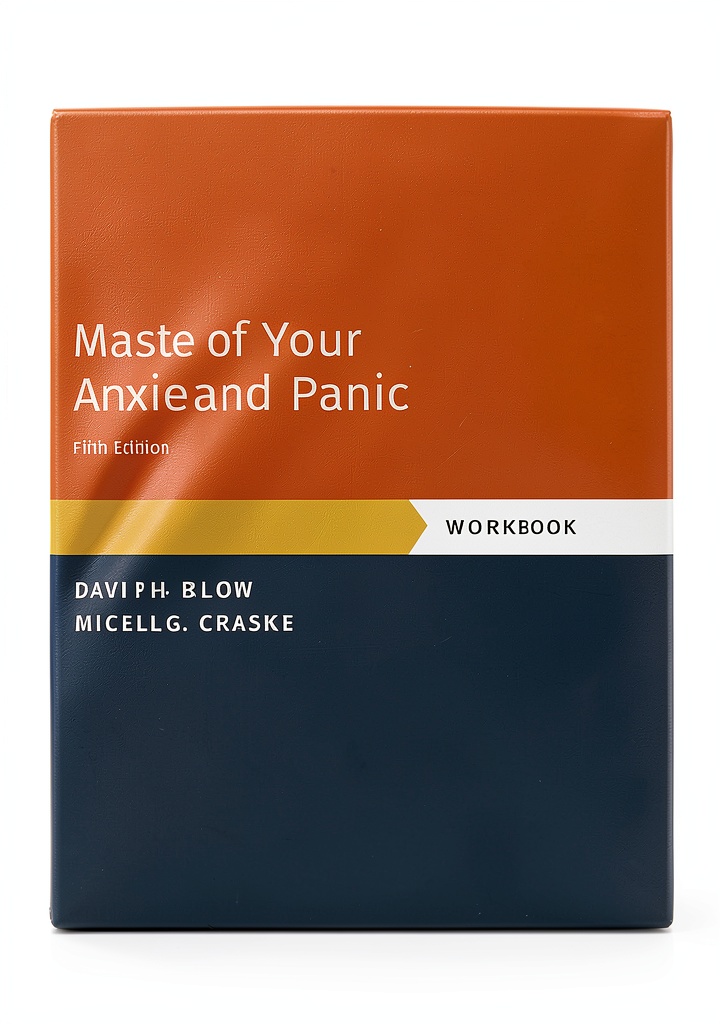
Enter the Oxford University Press Psychology eBook, ‘Anxieties and Phobias,’ from the renowned ‘Treatments That Work’ series. On paper, it promises authority and practical application. But does this 5th edition digital guide live up to its pedigree in the trenches of real-world clinical practice? As a psychologist who has integrated numerous such resources into my work, I’ve learned that the value isn’t just in the content—it’s in how that content translates to actionable steps during a busy day. This review goes beyond the specs to break down when this eBook is an indispensable tool and when your money and time are better spent elsewhere.
Key Takeaways
- Authority is its greatest strength: As part of Oxford’s ‘Treatments That Work’ series, the eBook provides rigorously tested protocols, primarily Cognitive Behavioral Therapy (CBT), giving you confidence in the interventions you’re applying.
- Designed for application, not just information: The content is structured to be used directly with clients, featuring worksheets, session outlines, and step-by-step guides that save precious preparation time.
- A potential mismatch for non-professionals: While accessible, the book is written for clinicians and advanced students. Individuals seeking self-help may find the clinical tone and lack of a guided program challenging.
- The digital format is a double-edged sword: Instant access and portability are major perks, but the lack of page numbers matching the physical copy can be a significant hurdle for academic citation or group study.
- Not a standalone solution: This is a manual for specific, protocol-driven therapy. It assumes a foundational knowledge of psychology and is best used as part of a broader therapeutic toolkit.
Quick Verdict
Best for: Practicing clinical psychologists, CBT therapists, and graduate-level students in psychology who need a trusted, ready-to-implement resource for treating specific anxiety disorders and phobias.
Not ideal for: Individuals seeking a casual self-help guide, professionals looking for in-depth theoretical analysis or non-CBT approaches, or those who require a physical book for easy flipping and citation.
Core Strengths: Unmatched credibility from Oxford University Press, practical and structured treatment protocols, time-saving client-ready materials, and the convenience of digital access.
Core Weaknesses: Clinical tone can be dense for non-professionals, lacks the tactile benefits of a physical textbook, and may feel too protocol-driven for therapists favoring integrative or psychodynamic approaches.
Product Overview & Specifications
This isn’t just another psychology eBook; it’s a focused clinical tool. The 5th edition of ‘Anxieties and Phobias’ from Oxford University Press represents the evolution of evidence-based practice. It belongs to the ‘Treatments That Work’ series, which is essentially the gold standard for manualized therapies that have survived rigorous clinical trials. The 225-page length is deceptive—this is dense, actionable content, not fluff. The enhanced typesetting and Word Wise features are nice touches for readability on screens, but the real value is in the structured programs for conditions like panic disorder, social anxiety, and specific phobias.
| Specification | Details |
|---|---|
| Publisher | Oxford University Press |
| Series | Treatments That Work |
| Edition | 5th |
| Format | eBook (Digital) |
| Pages | 225 |
| File Size | 1.9 MB |
| Language | English |
| ISBN-13 | 978-0197584118 |
| Best For | Clinicians, Therapists, Graduate Students |
Real-World Performance & Feature Analysis
Content Authority & Clinical Utility
In practice, the Oxford name and the ‘Treatments That Work’ imprint are more than just badges of honor; they are signals of reliability. When I’m preparing a treatment plan for a client with a complex panic disorder, I need to know the exposure hierarchy I’m using is backed by data, not just anecdote. This eBook delivers that. The protocols are presented clearly, often with rationales explained in a way that you can directly share with clients. The biggest real-world advantage is the inclusion of practical tools like patient handouts and worksheets. I’ve personally printed these directly from the eBook for sessions, which saves me from creating materials from scratch. However, the flip side is that the writing is concise and clinical. It’s not a book you read for narrative or inspiration; it’s a manual you consult for a specific procedure.
Usability & Digital Experience
The promise of a 1.9 MB file size is quick downloads and easy storage, which holds true. I’ve had it on my laptop, tablet, and phone without issue, which is invaluable for reviewing a protocol right before a session or while traveling. The enhanced typesetting makes it readable on various screen sizes. But here’s the trade-off I’ve encountered: the lack of consistent page numbers is a genuine pain point. If you’re in a supervision group or academic setting where others are using the print version, referencing “that section on interoceptive exposure” becomes a game of guesswork rather than saying “turn to page 87.” The search function helps, but it’s not a perfect substitute for the spatial memory of a physical book.
Application in Professional Settings
Let me paint two real-life scenarios. First, as a supervisor for a new therapist, this eBook is a fantastic resource. I can assign specific chapters on, say, conducting a behavioral assessment for a phobia, and the junior clinician has a structured, evidence-based framework to follow. Second, in my own practice, when a client presents with a less common specific phobia (e.g., vomiting phobia, or emetophobia), this book provides a validated structure for gradual exposure that I can adapt, giving me confidence I’m not reinventing the wheel. The value is in its role as a trusted, on-demand consultant. It’s not the book you read cover-to-cover for fun; it’s the one you open when you have a specific clinical problem to solve.
Pros & Cons
Pros
- Evidence-Based Authority: Backed by Oxford University Press and the ‘Treatments That Work’ series, providing unparalleled confidence in the methodologies.
- Highly Practical: Filled with ready-to-use worksheets, session outlines, and step-by-step treatment protocols that save clinicians hours of prep time.
- Portable and Accessible: The digital format means your entire reference library is available on any device, anytime—perfect for busy professionals.
- Structured and Focused: Offers clear, structured programs for specific anxiety disorders, reducing ambiguity in treatment planning.
- Up-to-Date: As a 5th edition, it incorporates the latest research and refinements in CBT for anxiety.
Cons
- Clinical and Dense: The tone is academic and direct, which can be intimidating or dry for students or individuals seeking self-help.
- Digital Format Limitations: The inability to easily match page numbers with the print version is a significant drawback for academic work or group study.
- Narrow Focus: Adheres strongly to a CBT framework; therapists seeking integrative, mindfulness-based, or psychodynamic perspectives will need to look elsewhere.
- Requires Foundational Knowledge: Assumes the reader understands core psychological principles and assessment techniques.
- Cost: At over $36, it’s a premium-priced eBook, and the digital-only format may not feel like a tangible value to some.
Comparison & Alternatives
To understand this eBook’s place in the market, it’s essential to compare it to other options.
Vs. “The Anxiety and Phobia Workbook” by Edmund Bourne
(The Cheaper, More Accessible Alternative)
Bourne’s workbook is a classic, often priced significantly lower. It’s an excellent resource for clients as a supplement to therapy or for highly motivated individuals managing mild to moderate anxiety. The key difference is the target audience. Bourne writes for the sufferer, while the Oxford eBook writes for the clinician. The Oxford guide provides the ‘why’ and the structured protocol for the professional; Bourne’s book provides the ‘how’ for the patient. Choose Bourne for a client-facing, accessible tool. Choose the Oxford eBook for the clinical backbone of your treatment approach.
Vs. Full Professional Training or Certification in CBT for Anxiety
(The Premium, High-Investment Alternative)
For a professional, a comprehensive certification program from an institution like the Beck Institute or a series of continuing education workshops is the premium alternative. This involves a much higher investment (often thousands of dollars) but provides interactive learning, expert feedback, and deeper skill development. The Oxford eBook is a resource; professional training is an education. This eBook can be a fantastic companion to such training, but it’s not a substitute for supervised practice and personalized feedback. Invest in training when you want to deeply master the application of these techniques; buy the eBook when you need a reliable, on-demand reference to support your existing skills.
Buying Guide / Who Should Buy
This product is a specialist tool, and its value depends entirely on your role and goals.
Best For Beginners (with a caveat)
Graduate students in clinical or counseling psychology are the primary “beginners” who will benefit immensely. It provides a solid, trustworthy framework for learning how to structure evidence-based treatment. However, it should be used alongside supervision and foundational coursework, as it doesn’t teach the basic therapeutic skills (e.g., rapport building, core counseling techniques) needed to implement the protocols effectively.
Best For Professionals
This is the sweet spot. If you are a practicing psychologist, licensed therapist, or counselor who uses or wants to incorporate CBT into your work with anxious clients, this eBook is a worthy investment. It acts as a time-saving clinical assistant, ensuring your interventions are aligned with the best available research. It’s particularly valuable for clinicians in private practice who may not have immediate access to a team for consultation.
Not Recommended For
This eBook is not recommended for individuals seeking a primary self-help resource. The clinical language and assumption of professional knowledge will likely be more frustrating than helpful. It is also not ideal for practitioners who are strongly opposed to manualized or protocol-driven therapy, as that is this book’s entire raison d’être. Finally, if you strongly prefer physical books for studying and referencing, the digital-only format’s drawbacks (page numbers, etc.) may outweigh its benefits for you.
FAQ
Is this eBook suitable for someone to use on their own without a therapist?
While the information is sound, I would generally advise against it. The book is written for clinicians and lacks the supportive, guided narrative of a true self-help book. Successfully working through anxiety and phobias often requires the guidance, support, and accountability of a trained professional to tailor the interventions and manage setbacks. A book like Edmund Bourne’s workbook is a more appropriate starting point for self-guided work.
How does this 5th edition differ from older editions?
New editions in the ‘Treatments That Work’ series typically incorporate the latest clinical research findings, refine protocols based on real-world feedback, and may address new or emerging understandings of anxiety disorders. While I haven’t done a page-by-page comparison, the 5th edition will offer the most current and refined versions of the treatment protocols, which is crucial for evidence-based practice.
Can I print the worksheets and handouts for my clients?
Typically, yes. The permissions for academic and clinical use are usually quite broad for these types of professional resources, allowing you to print materials for use with your own clients. However, it’s always prudent to check the specific terms of use or copyright information provided by Oxford University Press to be certain.
Is the price of $36.25 justified for a digital book?
This is the critical question. If you view it as a “book,” it seems expensive. If you view it as a clinical tool that can improve your efficiency and effectiveness as a therapist, the value proposition shifts. The time saved on creating materials and the confidence gained from using validated protocols can easily justify the cost for a professional. For a student or casual reader, it’s harder to justify compared to other options.